

Cooking salmon can feel like a high-stakes game of culinary roulette. One minute it’s perfectly flaky and delicious, the next it’s a dry, sad fish that’s lost its charm. The secret lies in knowing the ideal internal temperature. It’s not just about avoiding a dinner disaster; it’s about elevating your salmon game to gourmet status.
Understanding Internal Temp of Salmon Cooked
Achieving the right internal temperature when cooking salmon is crucial for both safety and taste. Perfectly cooked salmon not only looks appealing but also has a moist and tender texture.
Importance of Cooking Temperature
Cooking temperature plays a vital role in food safety and flavor enhancement. Proper heat prevents harmful bacteria from surviving in the fish. This approach ensures that diners enjoy a flaky and succulent meal. A temperature that’s too low may result in foodborne illness, while excessive heat could cause dryness. Striking the right balance elevates the dining experience while safeguarding health.
Recommended Temperature Guidelines
For optimal results, the USDA recommends cooking salmon to an internal temperature of 145°F. At this temperature, the fish achieves a perfect balance of tenderness and safety. Some chefs prefer a slightly lower temperature, around 125°F to 130°F, for a medium-rare finish. This method preserves moisture and enhances texture. Using a food thermometer ensures accuracy, making it easy to achieve the desired doneness consistently.
Factors Affecting Internal Temp of Salmon
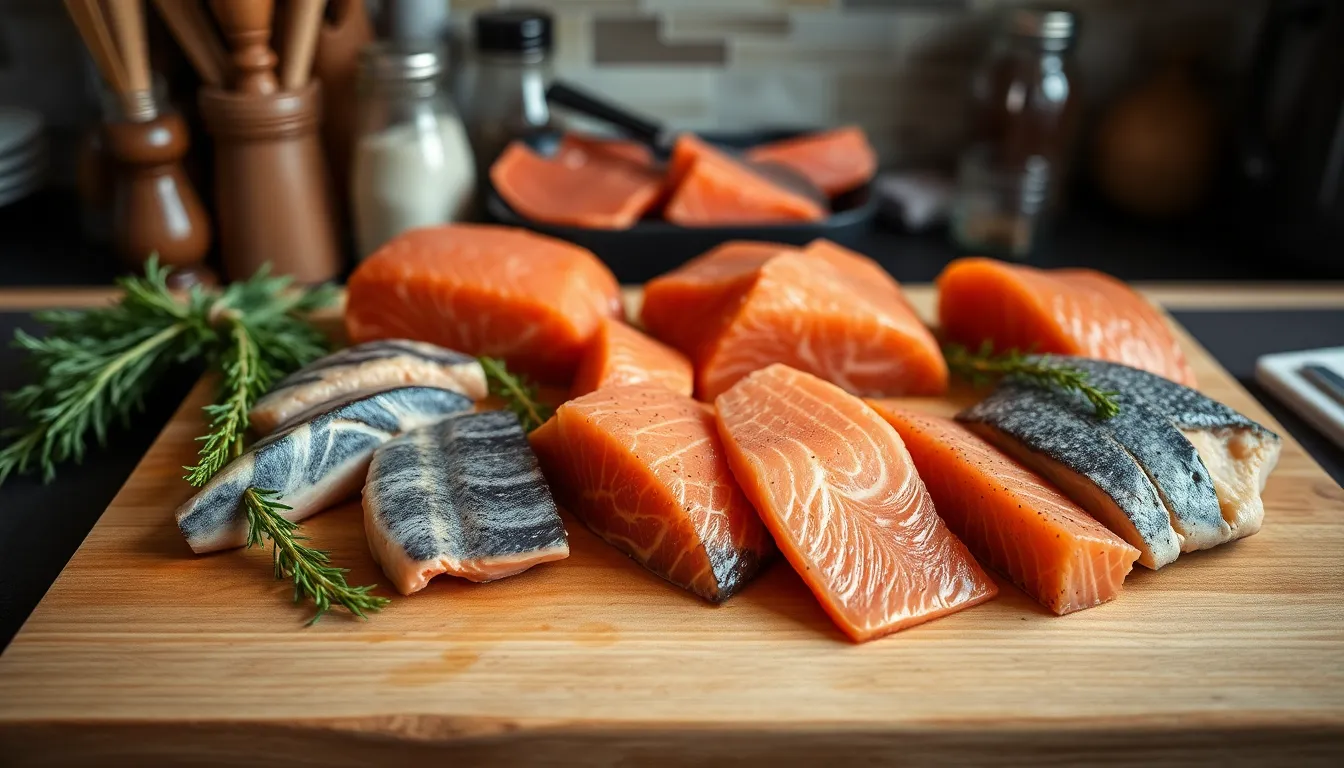
Multiple factors influence the internal temperature of salmon, impacting both safety and flavor. Understanding these factors aids in attaining the perfect doneness.
Type of Salmon
Distinct varieties of salmon, such as Atlantic, Sockeye, and Chinook, each display unique cooking characteristics. Atlantic salmon often contains more fat, which helps retain moisture and can affect the internal temperature perception. Sockeye salmon, with its leaner profile, may cook faster and require closer monitoring to avoid dryness. The species choice should align with desired texture and taste, as thicker cuts will generally take longer to reach the target temperature than thinner ones.
Cooking Method
The method of cooking significantly alters the internal temperature outcome. Techniques like grilling and pan-searing produce higher surface heat, which can quickly cook the exterior while leaving the interior less done. Conversely, baking in a low-temperature oven promotes even cooking throughout, leading to a more consistent internal temperature. Sous-vide cooking provides precise control over temperature, ensuring the salmon reaches a specific doneness without overcooking. Each technique tailored for salmon can yield distinct textures and flavors, impacting overall enjoyment.
How to Measure Internal Temp of Salmon
Measuring the internal temperature of salmon ensures it reaches optimal doneness and flavor. Accurate measurements lead to a tasty and safe dish.
Using a Meat Thermometer
Using a meat thermometer provides precise temperature readings. Insert the thermometer into the thickest part of the salmon fillet for the best results. Ensure it doesn’t touch the bones, as that can lead to inaccurate readings. For safety, aim for an internal temperature of 145°F per USDA guidelines. Chefs favor cooking to 125°F to 130°F for a medium-rare finish, which allows the salmon to retain moisture and enhance its texture. Investing in a reliable thermometer pays off, as this tool guarantees consistent cooking every time.
Visual Cues for Doneness
Visual cues offer additional ways to assess salmon doneness. Look for a change in color; fully cooked salmon transitions from bright pink to a pale orange. Flaking occurs when salmon is done; a fork should easily separate the flesh into segments. Additionally, clear juices signal cooking completion. Observing the fish’s surface can also help; opaque skin indicates it’s ready. Combining visual cues with temperature readings allows for better grilling, baking, or pan-searing techniques. Understanding these indicators can elevate any cooking experience with salmon.
Best Practices for Cooking Salmon
Cooking salmon perfectly requires attention to detail. Understanding techniques and avoiding common mistakes can elevate the dish significantly.
Techniques for Perfectly Cooked Salmon
Grilling prepares salmon with a smoky flavor, enhancing its natural taste. Baking retains moisture, creating a tender texture. Sous-vide cooking allows for precise temperature control, ensuring even doneness throughout. Pan-searing develops a crisp exterior while keeping the inside moist. Utilizing a food thermometer guarantees the fish reaches the desired internal temperature. Checking for doneness includes observing the color transition from bright pink to pale orange. Flaking with a fork can indicate readiness as well.
Common Mistakes to Avoid
Overcooking salmon leads to dryness and loss of flavor. Skipping the thermometer prevents accurate temperature checks, resulting in guesswork. Placing salmon directly on high heat can burn the exterior while leaving the center undercooked. Forgetting to let salmon rest post-cooking affects juiciness and flavor retention. Selecting the wrong type of salmon can undermine the cooking process, as different varieties vary in oil content and cooking times. Ignoring visual cues, such as clear juices or flakiness, can also result in undesired outcomes in texture.
Achieving the perfect internal temperature for salmon is essential for both flavor and safety. By understanding the nuances of different salmon types and cooking methods, cooks can elevate their dishes to new heights. Using a meat thermometer ensures that the salmon is cooked to the desired doneness while preventing overcooking.
Visual cues also play a crucial role in determining when the fish is ready to serve. With a little attention to detail and practice, anyone can master the art of cooking salmon. Following these best practices will not only enhance the dining experience but also instill confidence in the kitchen. Perfectly cooked salmon awaits those willing to embrace these techniques.


