

Imagine a world where your coffee brews itself while you’re still snoozing in bed. Home automation hardware makes this dream a reality, transforming everyday tasks into effortless routines. With smart devices at your fingertips, you’ll wonder how you ever survived without them.
From lights that adjust to your mood to thermostats that learn your preferences, home automation isn’t just a trend; it’s a lifestyle upgrade. It’s like having a personal assistant who never takes a coffee break. Dive into the world of home automation hardware and discover how it can simplify life, save energy, and even impress your friends with your tech-savvy abode. Who knew being lazy could be so productive?
Overview of Home Automation Hardware
Home automation hardware encompasses a range of devices designed to enhance daily living through technology. These devices include smart lighting, smart thermostats, security cameras, smart speakers, and smart plugs, among others. Each piece plays a crucial role in creating an integrated and efficient home environment.
Smart lighting systems, for instance, allow users to adjust brightness and color based on mood or time of day. These systems make it possible to automate scheduled lighting changes, ensuring safety and convenience. Learning thermostats optimize energy consumption by adapting to user preferences, leading to cost savings and environmental benefits.
Security cameras offer peace of mind through live feeds and alerts. Homeowners can monitor their property remotely, improving security and control. Smart speakers provide a central hub for voice commands and audio playback, integrating various devices seamlessly.
Smart plugs transform standard appliances into smart devices. Users can control them remotely or schedule operation times, which enhances energy efficiency. Overall, home automation hardware integrates to form a cohesive system, making life easier and smarter.
Data indicates that consumers increasingly adopt these technologies, enhancing the appeal of connected living. Reports show that 70% of households express interest in smart home solutions, driven by the quest for convenience and energy efficiency. Investment in home automation hardware is likely to continue growing, reflecting a shift towards a more automated lifestyle.
Types of Home Automation Hardware
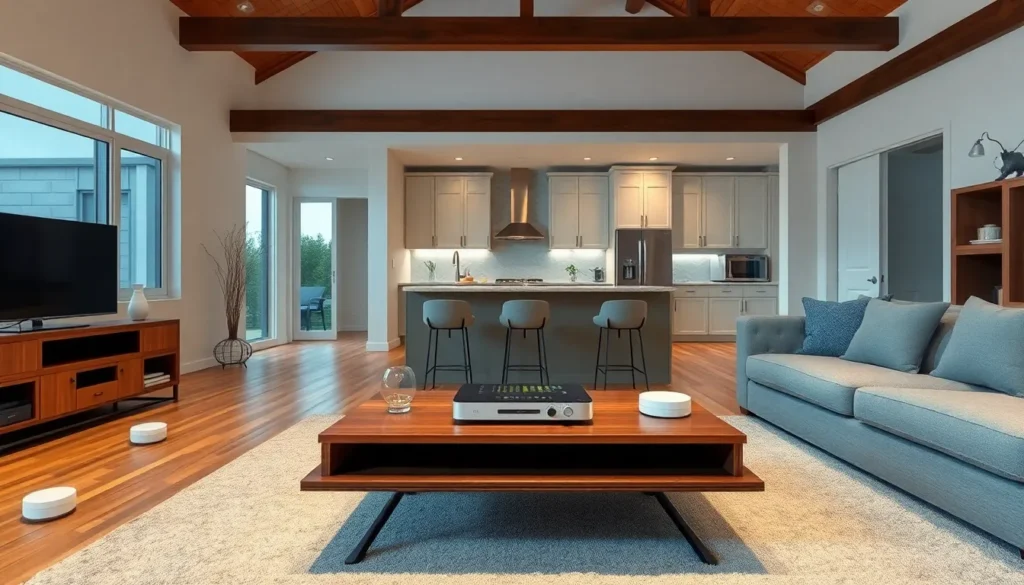
Home automation hardware encompasses a variety of devices that enhance everyday living. Each type plays a distinct role in creating a streamlined and intelligent environment.
Smart Hubs
Smart hubs centralize control of multiple devices within a home. They allow users to manage security systems, lighting, and temperature settings from a single interface. Different brands offer unique features, including voice activation and compatibility with various smart home protocols. For example, popular hubs like Amazon Echo and Google Nest integrate seamlessly with other devices, making automation hassle-free. Users can issue voice commands to control their connected devices, ensuring convenience and improving efficiency.
Sensors and Detectors
Sensors and detectors monitor various conditions and provide critical data to smart systems. Motion sensors trigger alarms or alert users about activity within or around the home. Temperature sensors help regulate heating and cooling, contributing to energy savings. Additionally, smoke and carbon monoxide detectors enhance safety by alerting occupants to potential dangers. Devices such as Philips Hue motion sensors provide smart lighting control while also acting as security measures. Homeowners find their response to environmental changes more precise and timely with these devices.
Smart Appliances
Smart appliances elevate home chores with advanced technology. They offer features like remote monitoring and control, significantly increasing convenience. Examples include refrigerators that can manage grocery lists and washing machines that allow users to start cycles from their smartphones. Various brands, such as LG and Samsung, lead in offering connectivity and smart features in their appliances. The integration of smart cooking appliances helps streamline meal preparation, while smart thermostats optimize energy consumption. Users benefit from increased efficiency and reduced utility costs with these innovative solutions.
Benefits of Home Automation Hardware
Home automation hardware provides substantial advantages that enhance modern living. These benefits include convenience, energy efficiency, and security enhancements.
Convenience and Accessibility
Smart devices streamline daily routines, making life easier. Users can manage lighting, temperature, and appliances from their smartphones or voice assistants. Flexibility comes from scheduling tasks, like dimming lights before bedtime or adjusting the thermostat remotely. Accessibility also improves for individuals with disabilities, as voice commands simplify control of various systems. Additionally, integration between devices allows for seamless transitions, like turning off all lights and locking doors simultaneously when leaving home.
Energy Efficiency
Home automation hardware significantly reduces energy consumption, contributing to lower utility bills. Smart thermostats learn user preferences, optimizing heating and cooling schedules based on patterns. Automated lighting ensures that lights turn off when rooms are unoccupied, further decreasing energy waste. Sensors detect room occupancy and adjust energy use effectively, enhancing overall efficiency. In fact, devices equipped with energy monitoring capabilities help track usage, enabling users to make smarter choices about their consumption habits.
Security Enhancements
Investing in home automation hardware elevates security measures substantially. Security cameras with remote access offer real-time monitoring, allowing users to check their property from anywhere. Intrusion detection systems alert homeowners to unusual activity, ensuring prompt responses to potential threats. Smart doorbells provide video feeds and two-way communication, enhancing visitor management. Users can program automated locks to secure the house, providing peace of mind while away or during nighttime.
Considerations When Choosing Home Automation Hardware
Choosing the right home automation hardware involves several important factors. Evaluating compatibility, installation requirements, and cost factors ensures a seamless smart home experience.
Compatibility
Compatibility among devices represents a crucial consideration. Many smart devices operate on specific ecosystems, like Google Home or Amazon Alexa. Ensuring devices work together within these ecosystems simplifies control. Checking compatibility with existing devices can prevent operational issues. Homeowners benefit from compatibility, as it allows for a unified user experience across devices. Researching and confirming compatibility fosters a more satisfying and efficient automation system.
Installation Requirements
Installation requirements vary across different devices and systems. Some hardware requires professional installation, while others permit DIY setups. Assessing installation difficulty enhances planning and expectations. Certain smart devices connect easily through Wi-Fi, while others may need additional hubs or wiring. Clear instructions and guidance reduce installation confusion. Understanding these requirements streamlines the setup process and helps homeowners prepare adequately.
Cost Factors
Cost factors significantly influence hardware selection. Initial purchase prices may vary widely based on technology and features. Some devices offer advanced functionalities, driving up costs, while basic versions remain more affordable. Ongoing costs related to app subscriptions or energy savings also deserve consideration. Budgeting accordingly can help in making informed decisions. Evaluating the overall value of devices ensures compatibility with personal financial goals, making smart home technology accessible for various budgets.
Future Trends in Home Automation Hardware
Emerging technologies are set to enhance home automation hardware, making homes even smarter. Increased integration of artificial intelligence allows devices to learn user preferences, leading to tailored automation experiences. For example, AI-driven systems analyze patterns, adjusting heating and lighting without user input.
Voice control remains a significant trend shaping user interaction with smart devices. Consumers increasingly prefer convenience, opting for voice commands to control multiple devices from various manufacturers. Research indicates that over 40% of smart home owners utilize voice assistance regularly.
Another noteworthy trend involves the rise of energy-efficient hardware. Smart devices increasingly incorporate eco-friendly materials and energy-saving features to align with environmental concerns. Innovations in power management reduce energy waste while enhancing overall efficiency.
Compatibility among devices drives future developments. Many manufacturers focus on creating products that work across different ecosystems, providing seamless user experiences. Adoption of open-source platforms gains momentum, enabling greater versatility and customization.
Additionally, advancements in security technologies strongly influence future trends. Enhanced encryption and advanced authentication methods ensure users feel safe while relying on connectivity. Statistics reveal that around 60% of consumers prioritize security features when deciding on smart home devices.
Finally, affordability also defines the shift in home automation hardware. Increased competition among brands often results in better pricing and features, making smart technology accessible to a broader audience. It’s projected that smart home devices will see a 25% reduction in prices within the next five years.
Home automation hardware is reshaping modern living by offering unparalleled convenience and efficiency. As technology evolves the possibilities for creating a smart home are expanding. With a variety of devices available homeowners can tailor their environments to meet individual needs and preferences.
The integration of smart devices not only simplifies daily tasks but also enhances security and energy management. As consumers increasingly embrace these innovations the future of home automation looks promising. With ongoing advancements in AI and voice control homeowners can expect even more intuitive solutions.
Investing in home automation hardware is not just a trend; it’s a step towards a smarter and more efficient lifestyle. As more options become available at varying price points, the dream of a fully automated home is becoming a reality for many.


