

In a world where traffic jams feel like a second job and air pollution is the unwelcome guest at every family gathering, green transportation solutions are here to save the day. Imagine zooming past those gridlocked lanes in a sleek electric vehicle or gliding effortlessly on a bike, all while giving Mother Earth a big ol’ hug. It’s not just about getting from point A to point B; it’s about doing it with style and a whole lot less guilt.
Overview of Green Transportation Solutions
Green transportation solutions encompass a range of options that reduce environmental impact while addressing the challenges of traffic congestion and air pollution. Electric vehicles (EVs) represent a significant step forward, offering efficient performance with lower emissions compared to traditional gasoline-powered cars. In 2022, EV sales reached over 6.5 million units globally, demonstrating a growing acceptance of this eco-friendly alternative.
Bicycles stand out as another effective solution, providing a sustainable means of transportation that improves air quality and decreases reliance on fossil fuels. In urban areas, cycling infrastructure development has increased significantly, leading to a 30% rise in bicycle usage in cities like Amsterdam and Copenhagen within the last decade. This trend highlights a shift towards more active and environmentally conscious commuting methods.
Public transportation systems are crucial in the pursuit of greener urban mobility. Options such as buses and trains facilitate mass transit while reducing individual vehicle use. For instance, an average city bus can replace around 40 single-occupancy vehicles, significantly lessening congestion and emissions.
Carpooling and ridesharing services offer additional avenues for reducing the number of vehicles on roads. By encouraging shared rides, these services decrease traffic congestion and carbon footprints. Studies indicate that ridesharing can reduce total vehicle trips by up to 30%, emphasizing its potential impact.
Alternative fuel sources, including biofuels and hydrogen, are emerging as viable solutions for powering transportation. Research continues to advance these technologies, promising to further decrease the carbon footprint of various modes of transport.
These green transportation solutions collectively represent a shift towards sustainable mobility, aiming to create a cleaner environment while enhancing the quality of urban life.
Types of Green Transportation Solutions
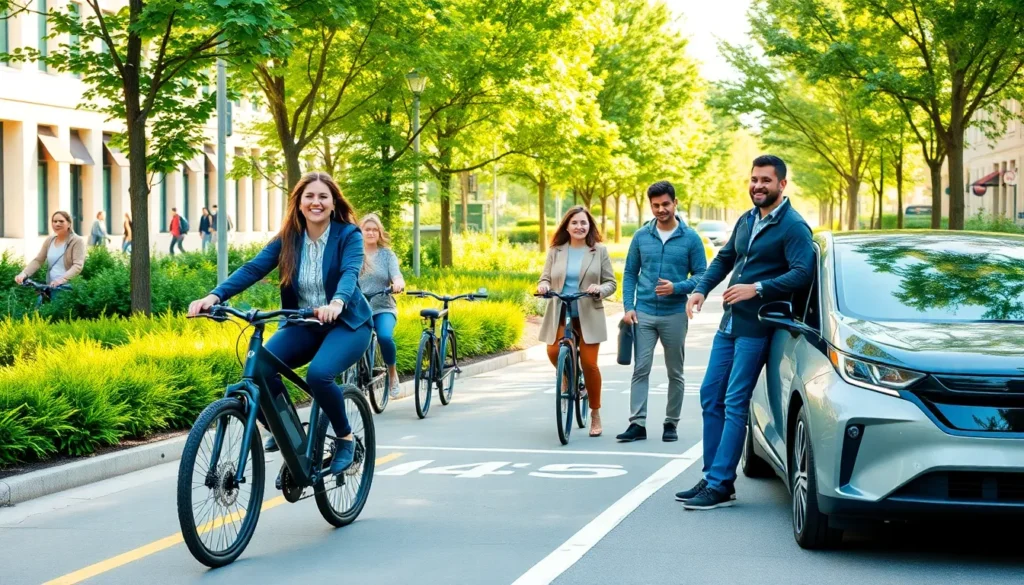
Green transportation solutions encompass various options that promote eco-friendliness and efficiency. Popular choices include electric vehicles, public transportation innovations, and improved cycling and walking infrastructure.
Electric Vehicles
Electric vehicles (EVs) gained significant popularity, with global sales exceeding 6.5 million units in 2022. These vehicles produce zero tailpipe emissions, making them an ideal choice for environmentally conscious consumers. Many manufacturers offer diverse models, catering to different preferences and needs. Infrastructure for charging stations is expanding, with an increasing number of locations available for quick charging. The ongoing development of battery technology enhances range and efficiency, further contributing to the growth of EV adoption.
Public Transportation Innovations
Innovations in public transportation significantly reduce reliance on personal vehicles. City buses can replace approximately 40 single-occupancy vehicles, leading to fewer emissions and less traffic congestion. Many companies are introducing electric buses, which provide cleaner alternatives. Advanced technologies, like smart ticketing and real-time tracking, improve user experience and accessibility. Some cities are also investing in tram and train systems, which deliver efficient public transit options for larger populations.
Cycling and Walking Infrastructure
Investment in cycling and walking infrastructure has surged in urban areas. Cities such as Amsterdam and Copenhagen experienced a 30% increase in bicycle usage, supported by improved bike lanes and safety measures. Walking paths are increasingly prioritized, encouraging pedestrian-friendly environments that promote health and reduce carbon footprints. Community initiatives often promote cycling through organized events and educational programs, fostering a culture of sustainability. These developments make cycling and walking practical and appealing transportation choices.
Benefits of Green Transportation Solutions
Green transportation solutions offer numerous benefits that positively impact the environment, economy, and society.
Environmental Impact
Electric vehicles produce zero tailpipe emissions, significantly reducing air pollution. Bicycles contribute to less congestion and lower greenhouse gas emissions, promoting cleaner cities. Public transportation systems replace many individual vehicles, leading to less traffic and smoother commutes. Studies indicate that an average city bus replaces around 40 single-occupancy vehicles. Utilizing alternative fuel sources, like biofuels and hydrogen, further lowers the carbon footprint of transportation. Cities implementing green transportation strategies often experience improved air quality and reduced noise pollution, fostering healthier urban living environments.
Economic Advantages
Investments in public transportation systems yield substantial economic returns. Each dollar spent on public transit generates approximately $4 in economic returns through job creation and increased accessibility. Electric vehicle sales reached over 6.5 million units globally in 2022, reflecting a growing market segment and supporting local economies. Enhanced cycling infrastructure also leads to increased local business revenue, as cyclists tend to shop more frequently and spend more. Carpooling and ridesharing reduce travel costs for individuals while decreasing overall transportation expenses for communities. Sustainable transportation initiatives create jobs in manufacturing, infrastructure development, and service sectors, bolstering economic stability.
Social Benefits
Green transportation fosters a sense of community by promoting walking and cycling. Improved cycling infrastructure, such as dedicated bike lanes, encourages more people to ride bicycles, increasing overall wellbeing. Public transportation enhances social equity by providing access to education and employment for underserved populations. Carpooling and ridesharing create opportunities for social interaction among commuters, building connections between individuals. Initiatives promoting sustainable practices empower communities to become more engaged in environmental stewardship. Overall, green transportation solutions contribute to a higher quality of urban life, making cities more livable and enjoyable.
Challenges in Implementing Green Transportation Solutions
Implementing green transportation solutions faces several significant challenges that hinder progress toward sustainable mobility. Two primary obstacles include infrastructure limitations and policy and regulation barriers.
Infrastructure Limitations
Infrastructure limitations present a major challenge in adopting green transportation solutions. Cities often lack the necessary charging stations for electric vehicles. Expanding charging infrastructure requires substantial investment, which may deter stakeholders. Moreover, insufficient or poorly designed cycling paths can discourage bicycle use among residents. Without safe routes, potential cyclists may feel unsafe or inconvenienced. In addition, public transportation systems need modernization to accommodate electric buses and enhance user experience. Improving and expanding these infrastructures is vital to support the growing demand for sustainable transportation options.
Policy and Regulation Barriers
Policy and regulation barriers further complicate the shift to green transportation solutions. Existing regulations may not favor emerging technologies, creating an uncertain environment for innovation. Some municipalities impose strict zoning laws that limit the development of necessary infrastructures, like charging stations and dedicated bike lanes. Additionally, insufficient incentives for electric vehicle adoption can stall progress. Implementing supportive policies that encourage development and investment in green transportation is crucial. Policymakers must consider comprehensive strategies to overcome these barriers, fostering an environment conducive to sustainable mobility.
Future Trends in Green Transportation Solutions
Emerging technologies and public advocacy are shaping the future of green transportation solutions. This shift aims to enhance sustainability and improve urban mobility.
Emerging Technologies
Innovations in technology impact electric vehicles and alternative fuel sources significantly. Companies are investing heavily in battery advancements that enhance EV range and reduce charging times. Data shows that electric vehicle sales exceeded 6.5 million units globally in 2022, indicating a marked increase in consumer acceptance. Smart city technologies, such as integrated traffic management systems, optimize transit efficiency and reduce congestion. Similarly, hydrogen fuel cells provide a promising alternative for long-distance travel, showcasing potential for significant carbon footprint reduction. These technologies will revolutionize urban transportation, paving the way for more sustainable mobility.
Public Awareness and Advocacy
Raising public awareness about green transportation solutions fosters community support and engagement. Advocacy groups promote the benefits of electric vehicles, biking, and public transit through campaigns and educational programs. Cities like Amsterdam and Copenhagen demonstrate how 30% increases in bicycle usage can result from enhanced infrastructure and public initiatives. Additionally, communities that prioritize sustainability often see improved social equity and public health outcomes. Cities are also adopting policies that encourage pedestrian-friendly environments, showing commitment to sustainable practices. Empowering citizens helps to accelerate the transition towards greener transportation options.
Embracing green transportation solutions is essential for creating a sustainable future. By prioritizing electric vehicles bicycles and public transit systems communities can significantly reduce their carbon footprints while improving air quality. The shift towards eco-friendly transportation not only enhances urban mobility but also fosters economic growth and social equity.
As cities invest in the necessary infrastructure and supportive policies the potential for greener transportation options will continue to expand. The collective effort of individuals governments and organizations will play a crucial role in this transition. With ongoing advancements in technology and a growing awareness of environmental issues the path toward sustainable mobility is clearer than ever.


