

In a world where multitasking reigns supreme, the best docking station can transform a chaotic workspace into a streamlined powerhouse. Imagine effortlessly connecting all your devices with a single, sleek hub—no more tangled cables or frantic searches for the right charger. It’s like having a personal assistant for your tech, minus the coffee runs.
With the right docking station, productivity skyrockets and frustration plummets. Whether you’re a remote worker juggling multiple screens or a gaming enthusiast craving seamless connectivity, the perfect docking station is your ticket to tech nirvana. Let’s dive into the best options that’ll have you saying goodbye to clutter and hello to efficiency—all while keeping your sense of humor intact. After all, who said tech can’t be fun?
Overview of Docking Stations
Docking stations serve as multifunctional hubs that connect laptops or tablets to various peripherals seamlessly. They enhance workspace efficiency by consolidating multiple connections into a single interface. Such devices are particularly useful for remote workers, gamers, and professionals who frequently toggle between different equipment.
These stations support a wide range of ports including USB-A, USB-C, HDMI, and Ethernet. Each type of port addresses specific connectivity needs, allowing users to connect monitors, storage devices, and network cables without hassle. When users connect their laptops to docking stations, they’ll notice an immediate reduction in cluttered workspaces.
Many docking stations also offer charging capabilities, ensuring devices remain powered without additional adapters. This feature becomes essential during long work hours, making sure devices stay functional throughout the day. Additionally, some models provide advanced features like dual monitor support, enhancing multitasking abilities.
Users find that docking stations significantly streamline their daily tasks. These devices allow for quick connections, meaning setups become faster and more efficient. A reliable docking station can transform any workspace, making it adaptable to various workstyles. As technology advances, the variety of available docking stations continues to grow, offering improved performance and convenience for users.
As professionals seek to optimize their workspaces, considering the benefits of docking stations becomes essential. Users can expect greater organization, improved connectivity, and enhanced productivity through the right selection of docking stations, making them a crucial element of modern setups.
Key Features to Consider
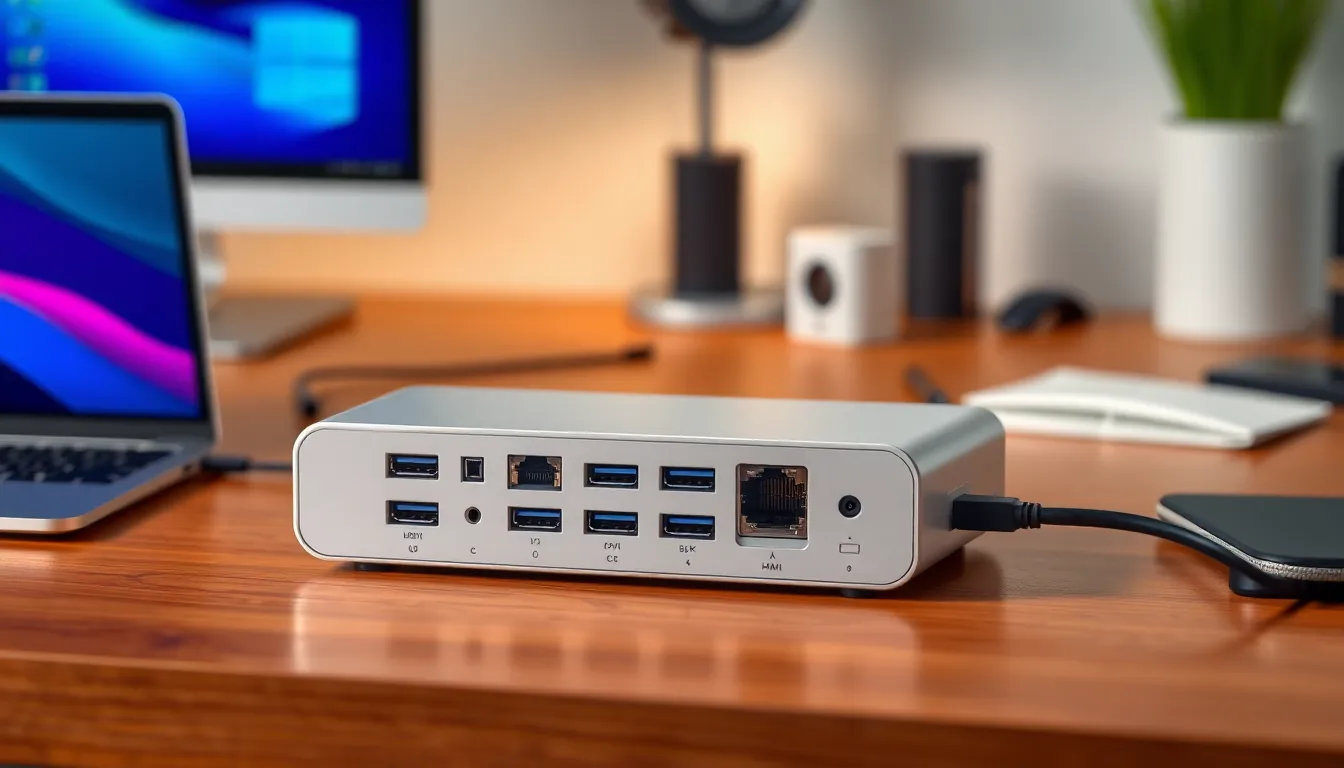
Selecting a docking station involves evaluating several key features that ensure optimal performance and user experience.
Connectivity Options
Connectivity options play a vital role in choosing a docking station. Look for models with multiple USB-A, USB-C, HDMI, and Ethernet ports to accommodate various devices. A versatile docking station enables simultaneous connections for keyboards, mice, monitors, and external storage devices. Consider units that support fast data transfer rates to maximize efficiency. Dual monitor support enhances productivity, providing users with increased screen real estate for multitasking. A well-equipped docking station caters to different professional needs.
Design and Build Quality
Design and build quality significantly impact user satisfaction. Premium materials and robust construction contribute to durability and longevity. Compact designs facilitate portability and fit well in diverse workspace environments. Ensure the docking station has an efficient heat dissipation system to maintain optimal performance. Aesthetics also matter; sleek, modern designs add to the overall appeal of the workspace. Prioritize docking stations with cable management systems to reduce clutter and improve organization.
Compatibility
Compatibility is crucial when selecting a docking station. Ensure the device works seamlessly with your laptop or tablet brand. Many models support both Mac and Windows systems, but checking specifications is essential for confirming compatibility. Some docking stations include drivers or software, enhancing functionality across different devices. Remaining aware of your device’s specifications helps verify that all ports and features meet your needs. Prioritizing a dock compatible with multiple devices enhances its utility for various tasks.
Top 5 Best Docking Stations
These top-rated docking stations enhance productivity and streamline connections for users across various environments.
Review of Docking Station 1
The Dell D6000 offers impressive versatility with support for up to three 4K monitors. Connectivity includes USB-C and USB-A ports, along with HDMI and Ethernet, ensuring comprehensive compatibility. Users appreciate fast data transfer rates reaching 10Gbps, which aids in efficient workflows. Design-wise, it features a sleek profile, making it suitable for both home and office settings. Furthermore, its ability to charge connected devices while in use adds to its appeal.
Review of Docking Station 2
Anker’s PowerExpand Elite delivers robust performance tailored for professionals. It features a total of 13 ports, including Thunderbolt 3, USB-C, and SD card slots. The high 85W power delivery efficiently charges laptops while connecting multiple devices. Users find the compact design convenient for travel, incorporating a built-in cable management system that keeps setups tidy. Additionally, its aluminum finish provides a modern aesthetic that blends well with various workspaces.
Review of Docking Station 3
The Plugable USB-C Triple Display Dock stands out with support for three displays using DisplayPort and HDMI outputs. It accommodates a wide range of USB devices with its array of ports. Enhanced audio support also benefits users who require superior sound quality. The docking station efficiently delivers 60W charging via USB-C, which keeps laptops powered during busy workdays. Thanks to its reliable performance, this model continually receives positive reviews from productivity-focused individuals.
Review of Docking Station 4
CalDigit TS3 Plus excels in offering extensive connectivity options, making it ideal for creative professionals. Featuring 15 ports, including Thunderbolt 3, HDMI, and digital audio outputs, it ensures compatibility with various devices. This docking station provides 87W power delivery, effectively charging connected laptops. Its sturdy aluminum construction signifies high durability, suitable for everyday use. Users highly recommend it for video editing and graphic design tasks due to its efficient data transfer capabilities.
Review of Docking Station 5
Targus Universal Docking Station combines functionality and versatility. It supports multiple connections, including HDMI, USB-C, and VGA, perfect for various setups. Users benefit from dual display support, allowing for improved multitasking. The station incorporates a lightweight design that facilitates easy transport, catering to those who travel frequently. Notably, its affordability compared to similar models makes it an attractive option for budget-conscious users.
Benefits of Using a Docking Station
Using a docking station centralizes connectivity in one location, simplifying the setup process. Professionals benefit from multiple ports to connect various devices, reducing the time spent on plugging and unplugging. Enhanced productivity emerges as users transition smoothly between tasks with fewer interruptions.
Another advantage involves cable management. Docking stations minimize clutter by organizing cables efficiently, leading to a cleaner workspace. Such organization not only improves aesthetics but also enhances workflow efficiency.
In addition, charging capabilities play a crucial role. Many docking stations power laptops and devices simultaneously, ensuring uninterrupted usage throughout the day. Users can remain productive during extended work hours without worrying about battery life.
Compatibility with multiple devices ensures versatility for various setups. Users can easily connect laptops, tablets, and even smartphones, tailoring their workspaces to meet diverse needs. This flexibility supports both remote workers and office professionals, making it suitable for different environments.
Dual monitor support represents another significant benefit. Many docking stations allow users to extend their displays, enabling better multitasking. Improved screen real estate enhances focus and facilitates complex workflows, particularly for designers and content creators.
Lastly, investing in a quality docking station proves beneficial long-term. These devices often feature robust build quality and longevity, providing reliable service over time. The value derived from enhanced organization, connectivity, and productivity significantly outweighs the initial investment.
Investing in a quality docking station can transform any workspace into a hub of productivity and efficiency. By centralizing connections and reducing clutter, these devices not only streamline setups but also enhance multitasking capabilities. Whether for remote work or gaming, the right docking station offers essential features like multiple ports and charging capabilities, catering to diverse needs.
As technology evolves, the variety of docking stations continues to expand, providing users with more options to suit their specific requirements. Ultimately, selecting the best docking station can lead to improved organization and a more enjoyable work experience, making it a worthwhile addition to any tech setup.