

As electric vehicles (EVs) zoom into the mainstream, they bring a shiny promise of cleaner air and greener roads. But hold your horses—there’s a catch! The infrastructure supporting these eco-friendly chariots is struggling to keep up. Imagine trying to charge your EV at a gas station that only serves unleaded. Not exactly a smooth ride, right?
From charging station availability to grid capacity, the challenges are as real as a flat tire on a road trip. As more drivers plug in, the demand for reliable infrastructure skyrockets. So, what’s standing in the way of a seamless EV experience? Buckle up as we explore the bumpy road ahead and uncover the hurdles that could derail the electric revolution.
Overview of EV Infrastructure Challenges
Growing electric vehicle adoption reveals numerous infrastructure challenges. Charging stations often lack availability, making it difficult for drivers to find convenient locations. Insufficient infrastructure limits long-distance travel for EVs, raising concerns about range anxiety. Grid capacity also represents a significant issue; many existing energy grids struggle to meet the increased demand from charging stations.
Cost constraints contribute to infrastructure challenges. Developing extensive charging networks requires substantial financial investment, which can deter private companies from expanding services. Additionally, urban areas frequently face space limitations, complicating the installation of new charging infrastructure. Rural areas experience their own difficulties with the lack of charging stations, which can isolate EV users.
Regulatory frameworks also play a role in EV infrastructure challenges. Inconsistent regulations across states and localities create confusion for businesses and consumers. Streamlining these regulations can enhance the deployment of charging networks. Furthermore, collaboration between government entities and private firms is essential for addressing these challenges.
User experience often suffers due to disparate technologies and charging standards. Standardizing these technologies can improve accessibility and convenience. Moreover, effective communication about charging availability and pricing increases user confidence in the infrastructure.
Long-term sustainability remains a concern, especially with the need for renewable energy sources to power charging stations. Transitioning to clean energy solutions can alleviate the environmental impact of increased electricity demand. Addressing these challenges proactively is crucial for a successful transition to a widespread electric vehicle ecosystem.
Key Barriers to Development
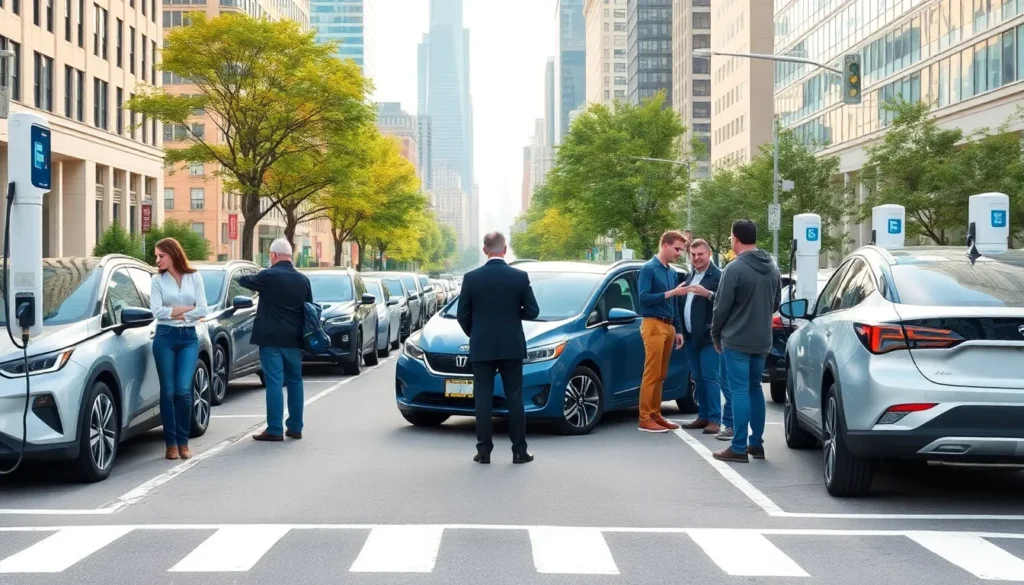
Several key barriers hinder the advancement of EV infrastructure. Addressing these challenges proves essential for the transition to electric mobility.
Insufficient Charging Stations
Insufficient charging stations remain a significant obstacle for EV adoption. Limited access complicates convenient travel for drivers, instilling range anxiety. As of 2023, approximately 1 in 4 drivers cite a lack of charging facilities as a major concern. Urban areas face a different set of challenges due to increased demand and space restrictions. Establishing more charging points promotes broader EV use and alleviates concerns about running out of power on longer journeys.
Grid Limitations
Grid limitations restrict the ability to support a growing number of charging stations. Many existing energy grids struggle to handle the increased demand, causing stress during peak usage times. Inadequate infrastructure often leads to outages and inconsistent service, frustrating users. Upgrading grid systems is crucial to ensure stability and reliability as the EV market expands. Collaboration between utilities and developers can secure essential resources for grid enhancements that accommodate future EV needs.
High Initial Costs
High initial costs pose significant barriers to infrastructure development. Investments required for charging networks, grid upgrades, and renewable energy sources can be substantial. Business models that leverage public-private partnerships can help mitigate financial burdens. Additionally, federal and state incentives may alleviate some costs for both developers and consumers. Reducing financial barriers increases the likelihood of widespread infrastructure adoption, easing the transition to electric mobility.
Technological Limitations
Technological limitations significantly impact the growth and efficiency of EV infrastructure. These challenges revolve around battery technology and charging speed and efficiency.
Battery Technology
Battery technology continues to evolve but faces hurdles that affect EV adoption. Current lithium-ion batteries limit energy density and range. Many drivers express concerns about battery lifespan and performance, particularly in extreme temperatures. In 2023, about 30% of potential EV buyers cite battery worries as a barrier to purchase. Research into solid-state batteries shows promise, offering higher capacities and faster charging times. Lower costs also stand to enhance accessibility. Addressing these issues is crucial for increasing driver confidence and expanding the EV market.
Charging Speed and Efficiency
Charging speed and efficiency remain essential factors influencing the adoption of electric vehicles. Standard charging stations may take several hours to recharge, creating inconvenience for users. Fast chargers, while more effective, are not universally available, limiting options, especially on long trips. Data from 2023 indicates that 60% of EV users prefer charging options that offer full capacity within 30 minutes. Improving charging efficiency involves investing in advanced technology and infrastructure. Collaboration with manufacturers and energy providers can facilitate quicker solutions for users, enhancing convenience and satisfaction with EV ownership.
Policy and Regulation Issues
Policy and regulation issues pose significant challenges to EV infrastructure development. These challenges arise from inconsistent regulations and lack of standardization across regions.
Lack of Standardization
Disparate technologies create confusion among drivers and manufacturers. Various charging connectors and protocols make it difficult for users to rely on uniform charging experiences. As adoption increases, creating standard interfaces becomes crucial. Organizations like the Society of Automotive Engineers advocate for consistency, yet varying local regulations hinder progress. Inconsistent standards can lead to frustration, particularly for motorists traveling between different states. Addressing these issues requires collaboration among stakeholders to simplify the user experience.
Incentive Discrepancies
Incentive discrepancies across states vary significantly. Some regions offer robust support for EV infrastructure, while others lag behind. Federal and state incentives can help drive adoption, but their inconsistency creates challenges. As of 2023, approximately 35% of potential EV buyers cite lack of financial incentives as a barrier. Encouragingly, states with comprehensive incentives benefit from higher EV adoption rates. Establishing uniform incentives fosters an environment that promotes consistent investment in charging networks. More cohesive policies could streamline infrastructure development and enhance accessibility for all users.
Future Directions
Advancements in electric vehicle (EV) infrastructure are essential for overcoming current challenges. Organizations and stakeholders must prioritize innovative strategies and collaborative initiatives.
Innovative Solutions
Emerging technologies offer promising solutions for enhancing EV infrastructure. Companies are exploring wireless charging systems that could eliminate the need for traditional chargers, improving convenience for users. Additionally, smart grid technology allows for better energy management and distribution, accommodating higher EV charging demand. Integration of renewable energy sources, like solar or wind, presents another opportunity to sustainably power charging stations. As of 2023, deploying a network of fast chargers remains a top priority, with many industry leaders emphasizing that increasing deployment can significantly reduce range anxiety.
Collaborative Efforts
Partnerships between public and private sectors play a crucial role in developing EV infrastructure. Stakeholders must engage in dialogues to create standardized regulations, ensuring compatibility across various charging stations. Furthermore, utilities can work alongside automakers to develop more efficient grid systems that support the influx of electric vehicles. Incentives for EV infrastructure investment should be promoted at both state and federal levels, addressing the 35% of potential buyers concerned about financial barriers. By fostering collaboration, communities can encourage consistent advancements, ultimately enhancing the EV experience for all users.
The challenges surrounding EV infrastructure are significant yet not insurmountable. Addressing the lack of charging stations and grid limitations is essential for fostering widespread electric vehicle adoption. As demand grows, innovative solutions and strategic collaborations between public and private sectors will play a crucial role in overcoming these obstacles.
Investments in technology and renewable energy sources can pave the way for a more efficient and accessible charging network. By standardizing regulations and enhancing user experience, stakeholders can create a more welcoming environment for potential EV buyers. The future of electric mobility hinges on collective action and commitment to building a robust infrastructure that meets the needs of drivers and supports sustainable transportation.


