

In a world where electric vehicles are zooming into the fast lane, the need for interoperable charging systems has never been more crucial. Imagine pulling up to a charging station and realizing it’s as compatible with your car as a cat in a dog park. Frustrating, right? Interoperable charging systems promise to eliminate that hassle, making charging as easy as finding a Wi-Fi signal at a coffee shop.
Understanding Interoperable Charging Systems
Interoperable charging systems play a critical role in enhancing the electric vehicle (EV) charging experience. These systems ensure compatibility across various EV models and charging stations, reducing the frustration associated with finding the right charging option.
Definition and Importance
Interoperable charging systems refer to standardized technology that allows EVs from different manufacturers to charge at the same stations. Such systems eliminate barriers related to incompatible connectors and protocols. This interoperability boosts the convenience of EV ownership, supporting widespread adoption. As more drivers switch to electric vehicles, the need for a cohesive charging network becomes essential. A seamless charging experience fosters consumer confidence in EV technology while ultimately contributing to a sustainable energy ecosystem.
Key Features
Interoperable charging systems come equipped with several vital features. First, they utilize common connectors that fit a wide range of EV models. Charge points adhering to open standards improve access and usability for all drivers. Additionally, real-time data sharing enhances the charging process by providing users with information on station availability and operational status. Furthermore, smart technology optimizes energy distribution, reducing wait times and costs. These key features collectively enhance the overall EV experience, making charging more user-friendly and efficient.
Current Landscape of Charging Systems
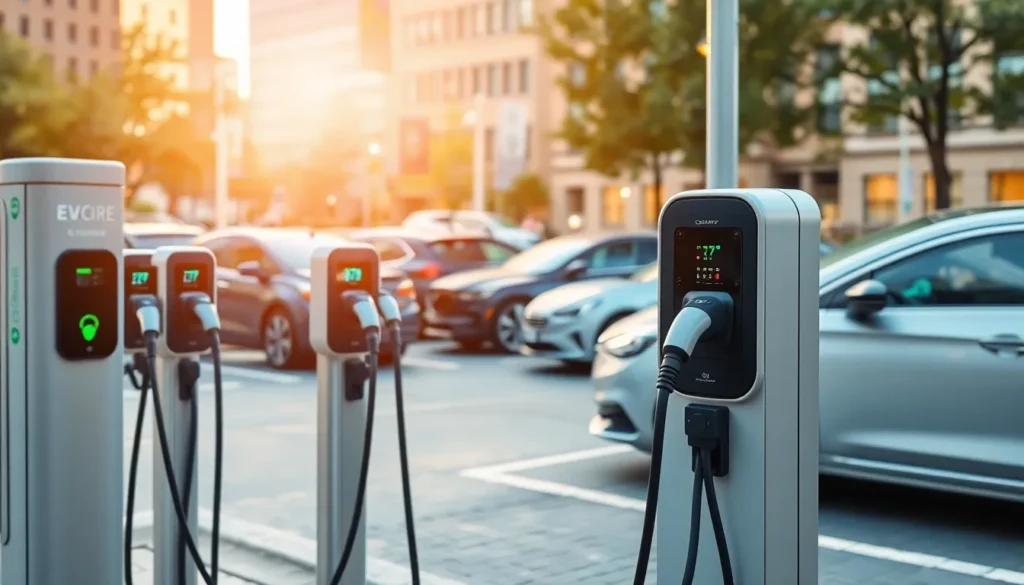
The landscape of charging systems is rapidly evolving to meet the demands of electric vehicle users. Interoperable charging systems enhance accessibility and convenience for drivers.
Existing Technologies
Multiple technologies support interoperable charging systems. Combined Charging System (CCS) connects various vehicles to a single charging station. CHAdeMO focuses on fast charging for specific brands, primarily Japanese models. Tesla Supercharger uses proprietary technology but is expanding to include more widely accepted connectors. Wireless charging is emerging, allowing vehicles to charge simply by parking over a pad. These technologies aim to eliminate incompatibility issues, fostering an efficient charging network.
Market Players
Numerous companies are shaping the charging systems market. ChargePoint operates one of the largest EV charging networks globally, providing various charging solutions. EVgo emphasizes fast-charging stations across urban areas, enhancing convenience for drivers on the go. Blink Charging features versatile products suited for both public and residential use. Automakers like Ford and General Motors are developing proprietary systems while gradually embracing universal standards. Collaboration among these players enhances the interoperability necessary for a seamless EV charging experience.
Benefits of Interoperable Charging Systems
Interoperable charging systems offer several advantages that enhance the experience and efficiency of electric vehicle (EV) users. These systems play a key role in making EV adoption more accessible and user-friendly.
Enhanced User Experience
Convenience ranks high with interoperable charging systems. Drivers enjoy the freedom to charge their vehicles at a variety of stations without worrying about compatibility issues. A unified network makes finding available chargers simpler for users. Features like real-time data sharing enable EV owners to locate charging stations quickly and plan trips efficiently. Access to common connectors ensures that diverse EV models can utilize the same charging points, removing frustrations associated with incompatible connections. Overall, this integration fosters confidence in owning and using electric vehicles.
Operational Efficiency
Operational efficiency improves significantly with interoperable charging systems. Streamlined charging processes reduce downtime for drivers waiting at stations. Smart technology optimizes energy distribution and helps manage grid loads effectively. Such systems can adjust charging speeds based on demand, minimizing energy waste and lowering costs. Collaborations between key players, including ChargePoint and EVgo, enhance the robustness of charging networks. When multiple charging options exist, EV owners experience faster charging times and better resource utilization. Efficiency in charging translates to a more sustainable approach to electric vehicle usage overall.
Challenges in Implementation
Interoperable charging systems face significant challenges that hinder their widespread adoption. Various technical barriers and regulatory issues complicate efforts to create a unified charging network.
Technical Barriers
Technical barriers include diverse charging standards and connector types. Companies often develop proprietary technology, leading to a fragmented market. Such fragmentation creates confusion for users, who might encounter incompatible chargers. The lack of standardization in communication protocols among charging stations adds complexity. Solutions that adapt to multiple standards require advanced technology and substantial investment. Lack of robust infrastructure in some regions further exacerbates these challenges. Manufacturers must prioritize collaboration to streamline technology and promote universal compatibility.
Regulatory Issues
Regulatory issues present another obstacle in implementing interoperable charging systems. Different regions enforce varying standards and regulations, complicating compliance for manufacturers. Unclear guidelines about interoperability can delay advancements and stifle innovation. Policies surrounding energy distribution and access to public charging stations often vary, creating inconsistency. Stakeholders must navigate this regulatory landscape while striving for efficient operations. Continuous dialogue among industry players and regulators is essential to establish consistent standards and protocols. Developing a unified approach to regulation will support interoperability efforts and promote consumer confidence.
Future Trends in Interoperable Charging Systems
Emerging trends point toward rapid advancements in interoperable charging systems, signaling a transformative phase for electric vehicle infrastructure.
Innovations and Developments
Innovations drive the future of interoperable charging systems. Companies are investing in universal charging connectors to simplify use across different EV models. New charging technologies, such as ultra-fast DC chargers, enable quicker turnaround times, enhancing user convenience. Additionally, advancements in mobile apps facilitate real-time updates on charger availability, optimizing charging strategies for users. Developing wireless charging solutions eliminates the need for physical connectors, further streamlining the charging experience.
Potential Market Growth
Potential market growth in interoperable charging systems appears substantial. The global EV market is projected to expand significantly, with estimates suggesting it may reach over 30 million units by 2030. Such growth creates a massive demand for interoperable infrastructure. Industry experts predict a compound annual growth rate (CAGR) of around 25% for charging stations over the next decade. Market player collaborations strategically position companies to capture this growth by improving service offerings and increasing accessibility. Moreover, consumer preferences for convenience and reliability will drive this expansion, making interoperability a vital component of future EV ecosystems.
Interoperable charging systems are set to revolutionize the electric vehicle landscape. By addressing compatibility issues and enhancing user experiences, these systems pave the way for a more accessible and efficient charging infrastructure. As the EV market continues to grow, the need for seamless charging solutions becomes increasingly critical.
With advancements in technology and collaboration among key players, the vision of a cohesive charging network is within reach. This evolution not only boosts consumer confidence but also supports a sustainable energy ecosystem. Embracing interoperability will ultimately lead to a brighter future for electric vehicle adoption and the environment.


